
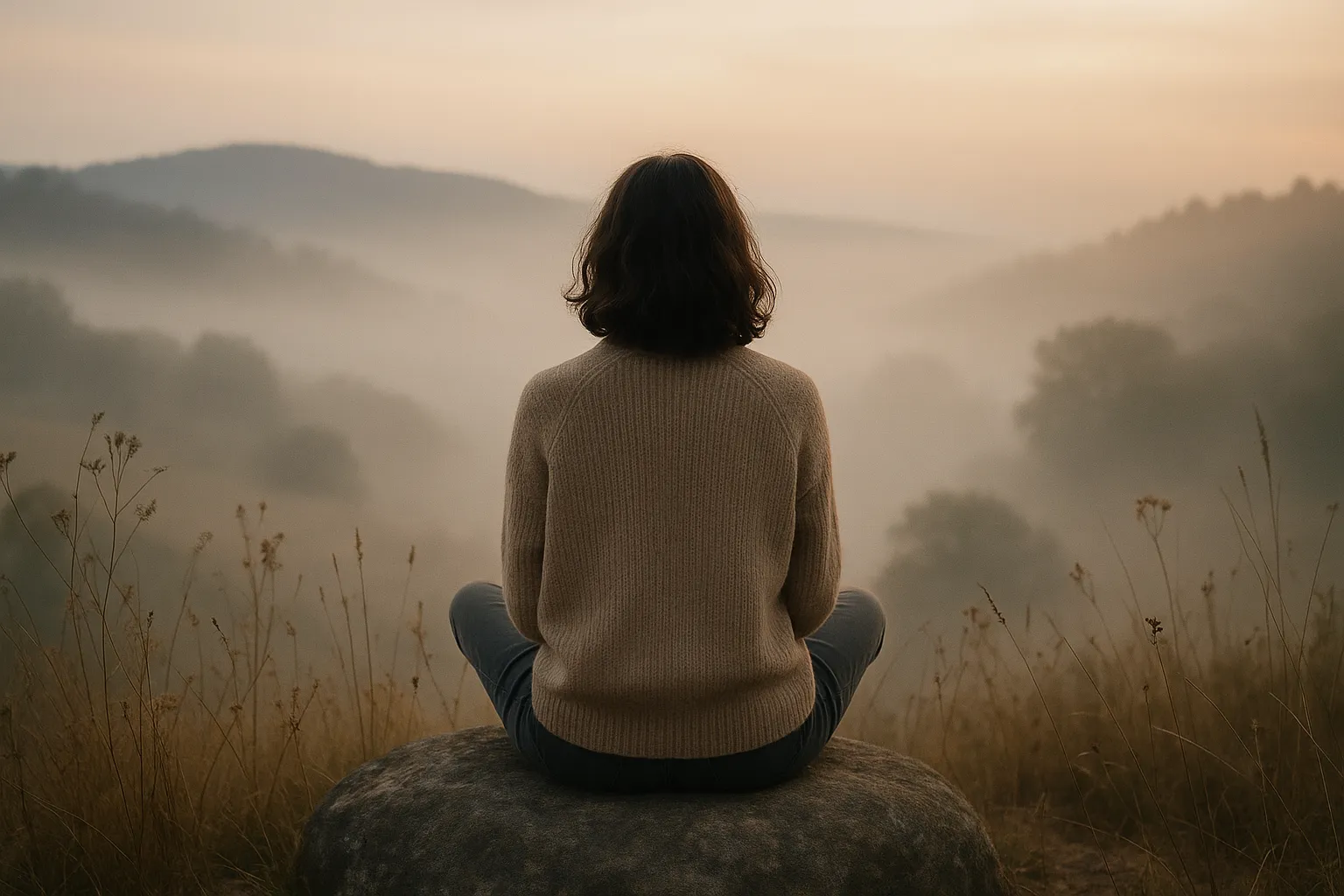
The Quiet Beginning
It started, as many things do, with silence.
Not the easy kind of silence that fills the space between songs or the pause before laughter — but the heavy kind that sits in your chest like fog. It was the silence after endings, the kind that demands you sit down and listen to your own thoughts, even the ones you’ve spent years avoiding.
For months, I lived inside that quiet. I woke each morning feeling the ache of unfinished things — the conversations I should have had, the boundaries I should have drawn, the tenderness I withheld from myself. I told myself I was waiting for the right time to start over, but in truth, I was afraid that maybe I no longer knew how.
A Life Unfolding
It’s a strange thing to realize that life doesn’t pause for your confusion.
It keeps unfolding — even when you’re not ready, even when you’re grieving. The days kept coming, the seasons changed, and somewhere between one morning and the next, I realized I had crossed an invisible threshold. I was no longer waiting to go back to who I was before; I was learning, painfully and slowly, how to inhabit the woman I had become.
This new version of me isn’t defined by loss, though loss shaped her. She isn’t driven by fear, though fear often walks beside her. She is quieter, yes, but also fiercer in ways that surprise me. I’ve begun to understand that strength doesn’t always look like resilience or endurance — sometimes it looks like softness, the willingness to stay open even when everything in you wants to close.
The Art of Letting Go
Letting go is not a single act. It’s a practice.
It happens in moments so small they’re almost invisible — the morning you stop replaying a memory, the afternoon you delete a message you no longer need to read. It’s the sigh that escapes when you realize you don’t have to prove your worth to anyone anymore.
I used to think healing would come with fanfare — a big, cinematic revelation, a sense of clarity sweeping everything clean. But healing, I’ve learned, is quieter. It’s the slow process of choosing yourself in the smallest of ways, day after day, until it becomes a habit.
Some days, I still look back. I still measure my progress by what I’ve lost. But I’m learning to turn my gaze forward — to see the new life unfolding in the spaces that grief once filled.
What I Owe Myself
There’s a kind of liberation that comes with realizing you owe the world nothing but your honesty.
Not perfection. Not performance. Just truth — even the messy, unpolished kind.
I owe myself gentleness after years of self-critique. I owe myself time to rest without guilt, love without conditions, and space to create without seeking validation.
I owe myself forgiveness for the versions of me that didn’t know better — the one who tried too hard to please, the one who stayed silent to keep the peace, the one who confused being needed with being loved.
And I owe myself permission to evolve. To outgrow the places and people that once felt like home. To want different things. To say no without apology.
The Beauty of Becoming
There’s a kind of beauty in watching yourself change — not the surface-level kind, but the quiet metamorphosis that happens in your thinking, your rhythms, your breath.
I used to mourn every shift, as if change meant betrayal of the past. Now, I see it differently. Change is the evidence that I am alive.
Every wrinkle tells a story of laughter and pain. Every scar is a sentence in the book I’m still writing. Every morning I wake up and choose to begin again — that’s my revolution.
This chapter isn’t about chasing youth or nostalgia. It’s about claiming presence. It’s about showing up fully for my own life, even when it’s imperfect, even when it’s hard.
I am not who I was, and that’s a victory I didn’t know I was working toward.
On Love and Solitude
Love, I’ve learned, is not always about another person.
Sometimes it’s about returning to yourself — remembering what makes your heart steady, what fills you with quiet joy. I’ve spent years giving love away, measuring my worth by how much of it I could offer others. But now I’m learning to hold some back, to pour it inward.
Solitude doesn’t frighten me anymore. It feels like a friend I neglected for too long — patient, waiting, ready to remind me who I am when no one else is looking.
In solitude, I hear the truth of my own desires: to create, to connect, to feel deeply. To write words that heal and capture fleeting moments that would otherwise go unnoticed. To live slowly, with intention.
A Gentle Declaration
So this is my manifesto — not shouted, not framed in bold declarations, but whispered in the quiet certainty of self-awareness.
I will not chase what diminishes me.
I will not apologize for my depth, my need for softness, my refusal to rush.
I will fill my days with small rituals of care: morning light through the window, long walks without destination, words written for no audience but my own.
I will forgive easily but forget slowly. I will choose peace even when pride tempts me toward conflict. I will keep learning how to love — differently, honestly, without the desperation to be chosen.
The Space Between Then and Now
There is a moment, just before dawn, when the world feels suspended — neither night nor morning, neither ending nor beginning. That’s where I am right now. Standing between who I was and who I’m becoming.
It’s an uncertain place, but it feels like freedom. I am no longer trying to control the story, no longer searching for resolution. I am simply living the sentences as they come — trusting that the meaning will reveal itself in time.
And maybe that’s what this new chapter is all about — not knowing, not perfecting, but allowing. Allowing myself to exist in the in-between, to breathe through the uncertainty, to trust that even the quietest moments are leading me somewhere true.
Learning to Move Again
There came a morning when my body asked to be listened to.
Not punished, not fixed — simply heard. I stretched beneath the soft light spilling through the curtains and felt a kind of recognition: this skin, these bones, this pulse still belong to me. For too long I treated my body as a project, a thing to manage, not a home to inhabit.
Movement became my first language of return. Slow walks at dawn, hips swaying to music no one else could hear, hands rediscovering shape and texture through small acts of making — kneading bread, brushing paint across paper, running fingers through soil. Each movement said, I am here, I am still becoming.
I stopped demanding transformation and started celebrating motion. There is no arrival, only continuation, only the steady rhythm of breath reminding me that living is an ongoing verb.
The Discipline of Joy
Joy used to feel like a guest who overstayed her welcome.
I would greet her, pour the tea, and then apologize for the mess in my mind. But joy doesn’t care about neatness. She sneaks in through cracks, through laughter shared over unwashed dishes, through sunlight that insists on touching your face even when you’re not ready to feel warm.
This chapter has taught me that joy is not accidental — it’s a discipline. It asks to be noticed. It requires participation. Some days, joy looks like making the bed simply because fresh sheets mean new beginnings. Other days, it’s saying no to noise, turning off the news, and sitting quietly with a cup of coffee and the sound of rain.
Practicing joy doesn’t erase grief; it simply reminds me that sorrow isn’t the whole story. The heart can hold both — the ache and the laughter, the longing and the gratitude — without breaking.
Creativity as Reclamation
When I began to write again, my words stumbled out like children learning to walk. They were clumsy, uncertain, easily embarrassed. But I kept writing — short sentences at first, fragments of thought, sketches of feelings too large to name.
Art is how I stitch myself back together. Through it, I reclaim the parts that went silent under obligation. A photograph, a paragraph, a color — each one gives shape to emotion that language alone can’t hold. Creativity isn’t an escape; it’s a return. It’s the mirror that shows me who I am becoming when I forget.
I no longer create for approval. I create because it feels like breathing — a necessary exchange between what lives inside me and what the world offers back.
The Grace of Ordinary Days
I once believed meaning lived only in extraordinary events — births, deaths, love stories, departures. Now I see it everywhere: in the rhythm of daily life, in the way morning light touches the kitchen floor, in the hum of the refrigerator at midnight.
Ordinary days are holy if you pay attention.
I’ve started keeping small rituals: lighting a candle before I write, whispering gratitude before sleep, pausing before I speak when I feel anger rising. These gestures may seem simple, but they anchor me. They remind me that I am building something sustainable — a life that doesn’t rely on chaos to feel alive.
Peace, I’ve learned, isn’t a reward. It’s a choice made repeatedly in moments that test your patience and tenderness.
Redefining Love
The more I understand myself, the more I redefine love.
It isn’t constant proximity or grand declarations. It’s presence — showing up when it would be easier to withdraw, listening without fixing, holding space for what is uncomfortable.
The love I crave now is quiet but steady, like a river carving new paths through familiar earth. It doesn’t demand, it nourishes. It allows growth instead of fear.
Sometimes I wonder if the deepest love is the one that teaches you how to stay — not in relationships, but within your own skin. To stay when anxiety tightens, when the mirror feels unfamiliar, when uncertainty whispers that you are lost. To stay, and still say: I belong here.
Forgiving the Past
There are ghosts I carry — versions of me who spoke too softly, who said yes when she meant no, who mistook endurance for devotion. I used to resent her. Now I understand she was only doing her best with what she knew.
Forgiveness is not absolution; it’s release.
When I forgive my past selves, I loosen the knots in my own chest. I stop rehearsing regret like a script and allow new words to form. Each act of forgiveness frees a fragment of energy that returns to the present, where it can be used for living instead of defending.
The past no longer defines me; it educates me. I can visit it for wisdom, but I no longer unpack there.
Listening to the Future
I don’t plan the way I used to. Plans once felt like armor — ways to control what frightened me. Now, I make space for possibility instead. The future isn’t a checklist; it’s a landscape. It asks for curiosity, not certainty.
When I close my eyes, I see glimpses of what might come: a room filled with laughter, a blank page waiting for words, a walk through a city I haven’t met yet. None of it is guaranteed, and that’s the beauty. The not-knowing keeps me alive, open, willing.
I trust that the right paths reveal themselves when I keep moving with integrity and intention.
Becoming My Own Witness
There’s power in witnessing your own life — noticing patterns, recognizing growth, acknowledging effort. I used to look outward for validation, for someone to say, I see you. Now I say it to myself.
Every time I write a sentence that feels true, I witness my own courage. Every time I choose rest over guilt, I affirm that worth isn’t earned through exhaustion. Every time I forgive instead of resent, I honor the woman I’ve worked so long to become.
Self-witnessing doesn’t mean isolation; it means alignment. It’s how I ensure that the way I live matches the way I dream.
A Soft Kind of Strength
Strength has changed its shape in my life. It used to wear armor, now it wears linen. It used to roar, now it hums. The older I grow, the more I see that gentleness takes more courage than defiance ever did.
To be soft in a hard world is radical. To remain hopeful in uncertain times is rebellion. To keep loving — yourself, others, life itself — after disappointment is an act of quiet revolution.
My manifesto isn’t written in ink but in daily choices: to stay kind, to stay curious, to stay awake.
The Unfinished Chapter
I don’t know where this story ends, and that’s the gift of it. The blank spaces no longer scare me. They invite me. There’s room for mistakes, for laughter, for love I haven’t met yet.
Maybe this is what wholeness feels like — not perfection, but peace with imperfection. A soft agreement with time: that I will keep changing, keep learning, keep showing up.
Tomorrow, I’ll wake again to the same quiet house, the same light spilling across the floor, the same uncertain hope that has always guided me. I’ll write another page, take another step, speak another truth.
And when doubt visits, as it surely will, I’ll remind myself that this chapter isn’t about certainty — it’s about presence. About living fully in the beautiful, trembling now.